Most of my articles are written with years of experience behind me. But this is an exception. Only a year ago, I decided to start writing again for the theatre. As a fresh-faced, cellulite-free twentysomething, I wrote for an amateur theatre company in South Africa called Mirror Image. Now, ten years later and living in the UK I thought I would try going professional.
My first ‘commercial’ play, ‘The Idol of Sarajevo’, has had some success, winning the Literary Consultancy scriptwrighting competition in January and being longlisted for the King’s Cross New Writing award in July. The first prize for this competition will be a full staging at the Courtyard Theatre in Covent Garden. It has also had two staged readings, one at the Contact Theatre in Manchester and another at Northern Stage in Newcastle. While I continue trying to get that play a professional staging, I’m halfway through the first act of a second one which I will start entering into competitions in the near future. So, if you’re like me, hoping to make a start writing for the theatre, here are a few tips I’ve learnt over the last year:
Tips for getting started
- Don’t despise amateur theatre – it’s a good way to hone your craft and get noticed.
- Watch as much ‘new theatre’ as possible. Some of it may not be to your taste, but you need to be aware of what kind of plays are being produced these days and which are not.
- Enter competitions. They give you deadlines and, if you win or get shortlisted, help to get you noticed.
- Staged readings are invaluable for seeing the strengths and weaknesses in your work. They are also a platform for getting you noticed. Theatres who do staged readings (some of which offer free critiques) may be found on the Writernet website.
- Writernet offers a professional, affordable critiquing service (subsidised by the Arts Council) as well as providing information on courses, theatre producers etc
- Writing for theatre is a different craft from writing for radio and screen but can be positively influenced by both. Writing for radio helps you concentrate on the aural landscape, writing for screen, the visual. Both are needed in theatre so it is worth doing short courses for each medium.
- The BBC Writers’ Room has an extensive list of courses available for each medium as well as providing some useful info on the art and craft of scriptwriting, or check out their blog.
- Agents are not likely to take you on until you’ve already had a professional staging and prefer clients who also write for radio and / or screen.
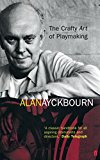
Books on scriptwrighting
- The Playwright’s Guidebook by Stuart Spencer
- Stage Writing by Val Taylor
- The Crafty Art of Playmaking by Alan Ayckbourn
Did you know?
Do you know the difference between scriptwriting and scriptwrighting? The former, tends to be used to cover all script media, whereas the latter, is specifically used for theatre. It’s ‘wright’ as in ‘wheelwright’ which refers to the crafting rather than just the writing of the script.


Pingback: Non-fiction travel writing at The Crafty Writer
Hi, I can’t understand how to add your site in my rss reader. Can you Help me, please 🙂
Find a theatre in your area. Preferably one you already attend as an audience member. If they have a scriptwriting programme they will advertise it. However, all theatres are sadly closed right now. But you might find something on their website.